Paris is full of beautiful things competing for your attention. A new exhibition, a hotel bar everyone suddenly knows about, another impossibly photogenic table somewhere in the 8th. But La Galerie Dior belongs to a different category. You do not visit it simply because you like Dior. You go because this is one of those rare places where fashion, architecture, history and pure visual pleasure come together without feeling like a lesson.
The setting already does half the work. Avenue Montaigne has always had its own particular kind of Parisian glamour – polished, precise and slightly removed from the chaos of the rest of the city. Dior has occupied number 30 since Christian Dior established his house here in 1946. Nearly eighty years later, the address still feels inseparable from the brand.
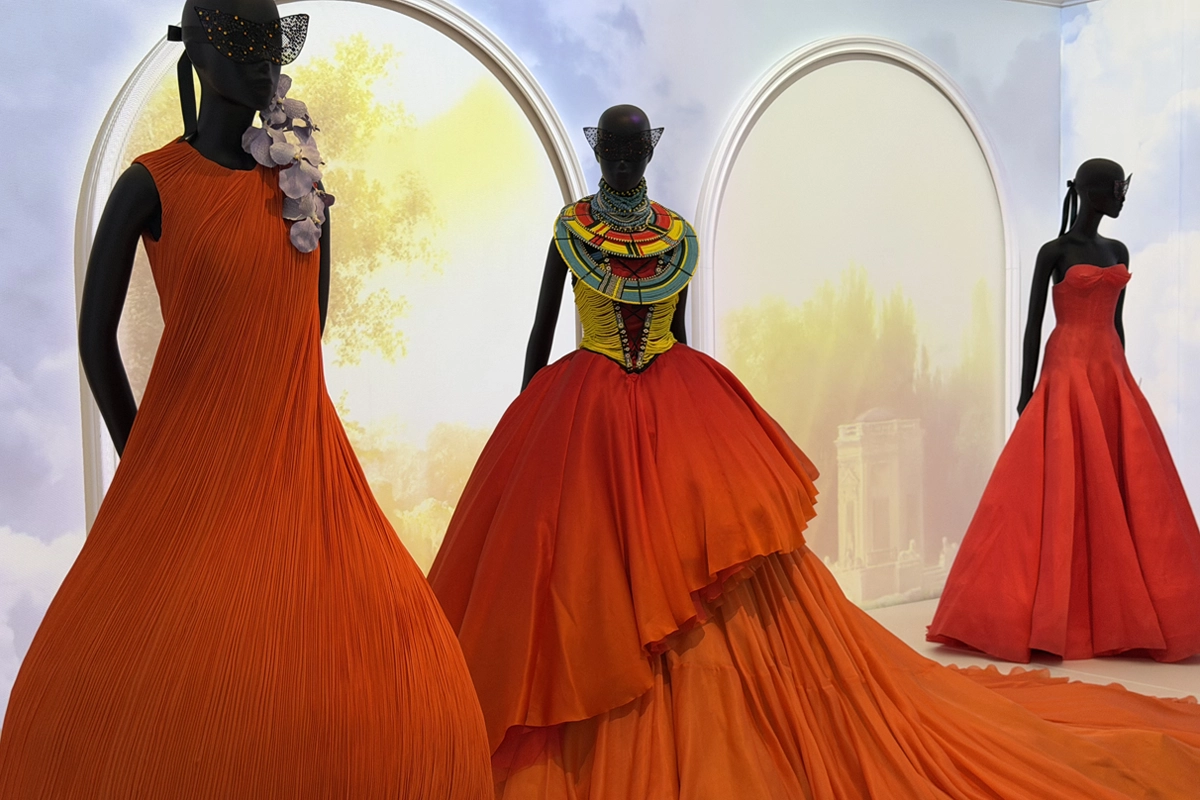
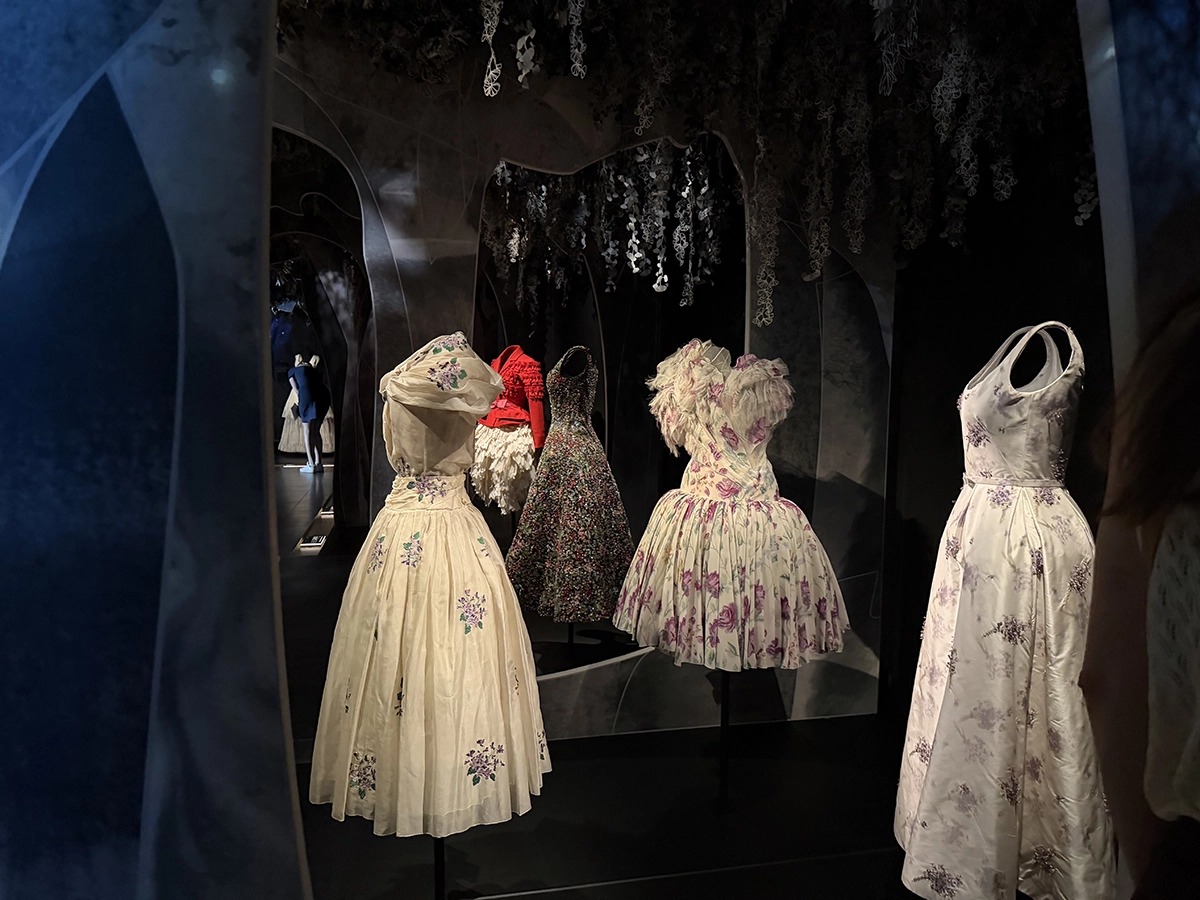
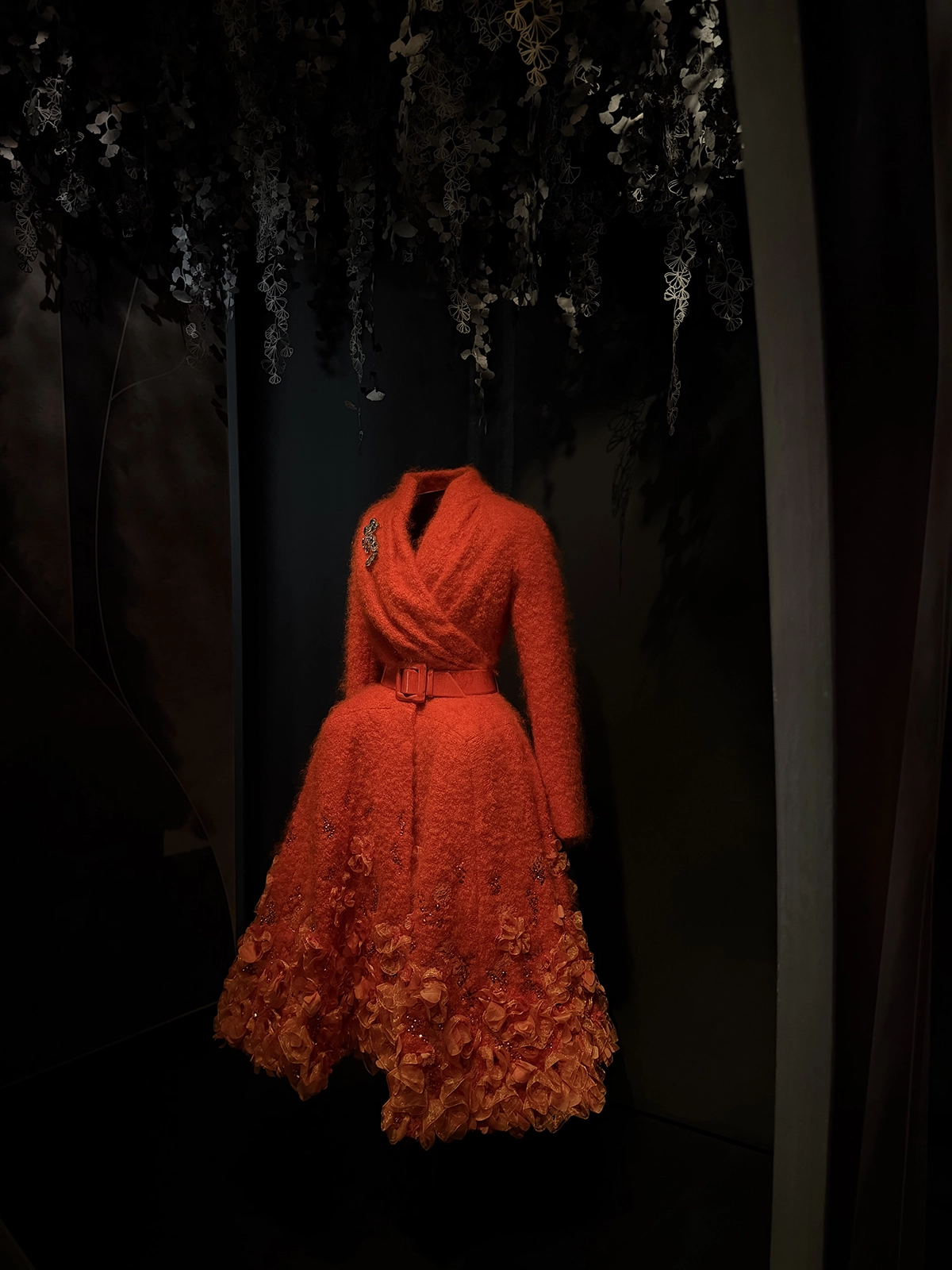
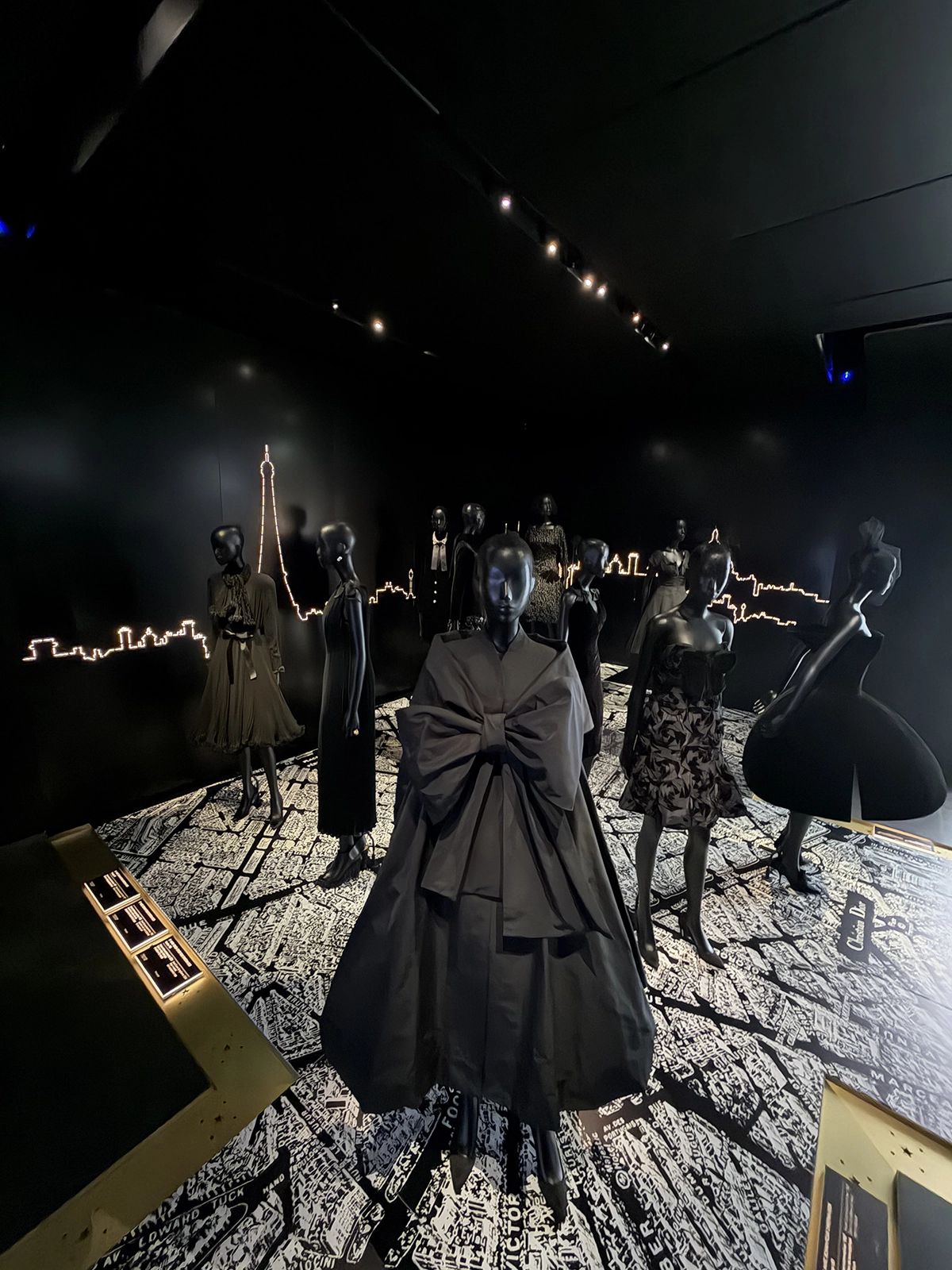
La Galerie Dior takes that history and turns it into something surprisingly contemporary. Forget silent rooms filled with dresses behind glass. The experience is closer to walking through a beautifully edited fashion dream. Silhouettes float through darkened rooms. Miniature gowns climb walls. Perfume bottles, hats, shoes, jewellery, sketches and photographs are arranged with the precision of a couture fitting.
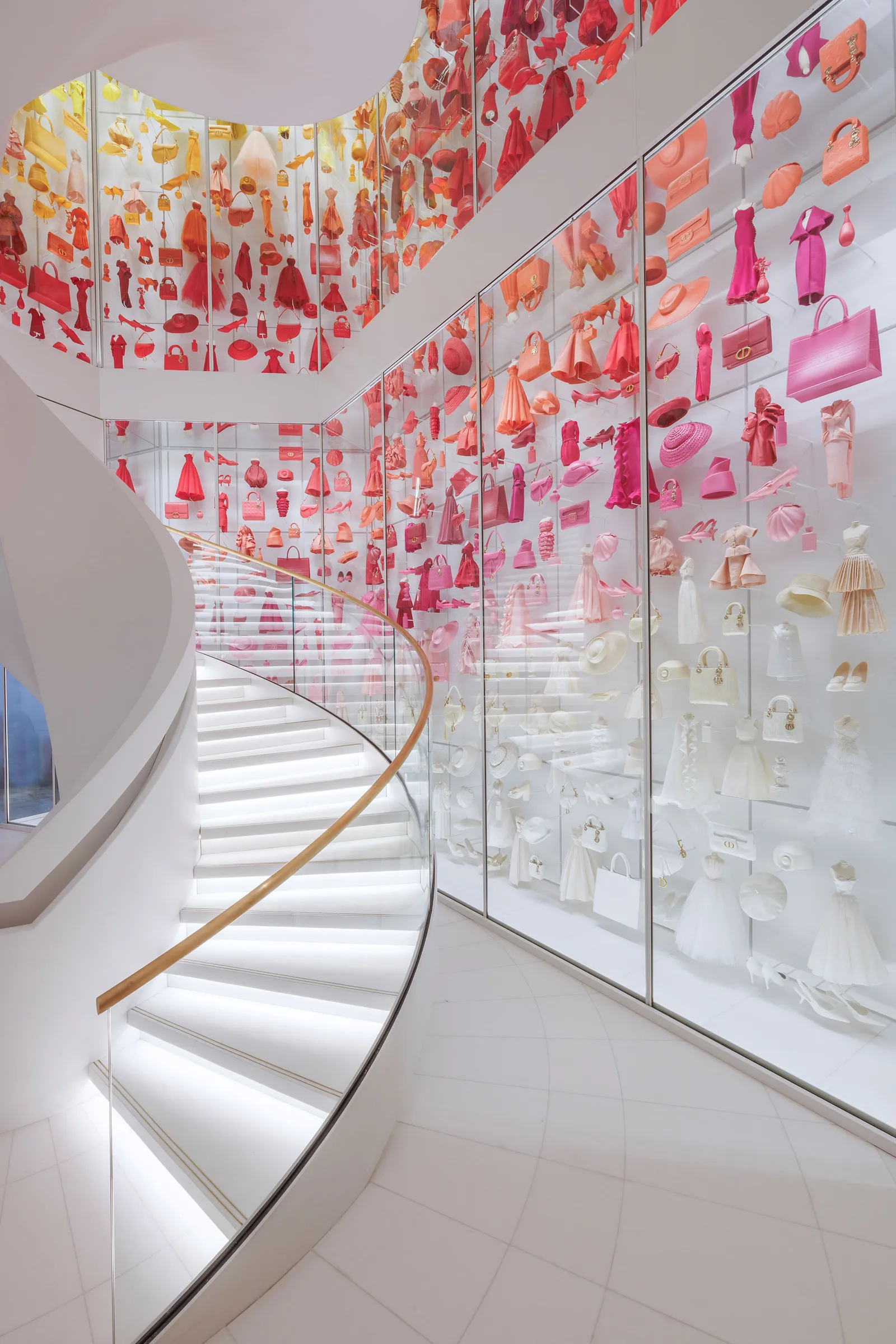
The famous Colorama alone could keep an entire camera roll occupied. Hundreds of Dior objects are arranged according to colour, creating an almost hypnotic spectrum of bags, shoes, hats and fragrance bottles. It is archive transformed into installation art and a reminder that Dior has never really been about a dress alone. It has always been about creating an entire visual universe.
Christian Dior understood silhouette. When his first collection appeared in 1947, its defined waists and voluminous skirts offered a completely different proposition from the practical fashion of the war years. Carmel Snow, then editor-in-chief of Harper’s Bazaar, famously gave it its name: the New Look.
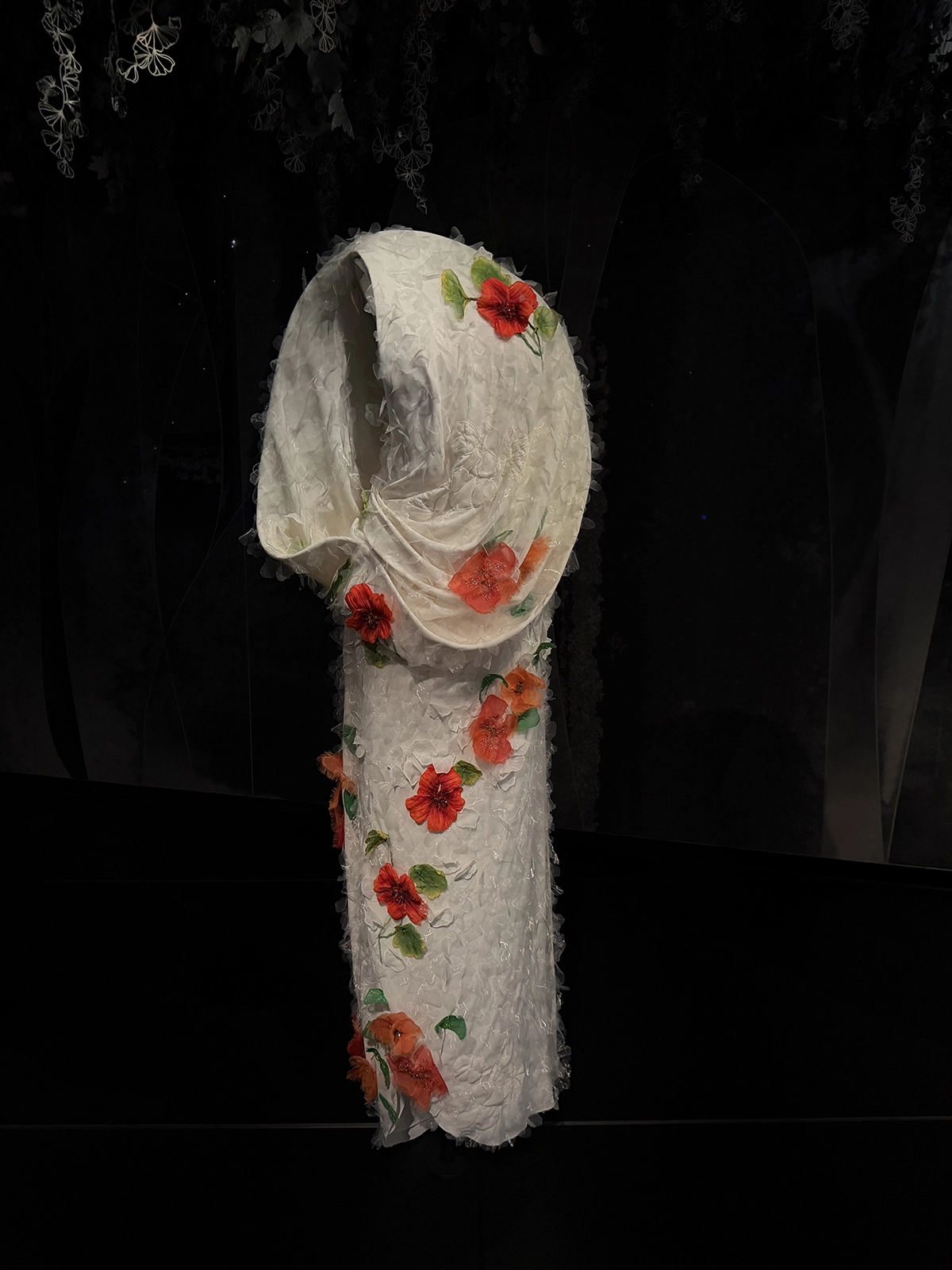
Flowers are almost impossible to escape. Dior’s fascination with gardens began during his childhood in Normandy, and roses and lily of the valley would become part of the house’s permanent vocabulary. Inside the gallery, they appear everywhere – in embroidery, colour, construction and detail.
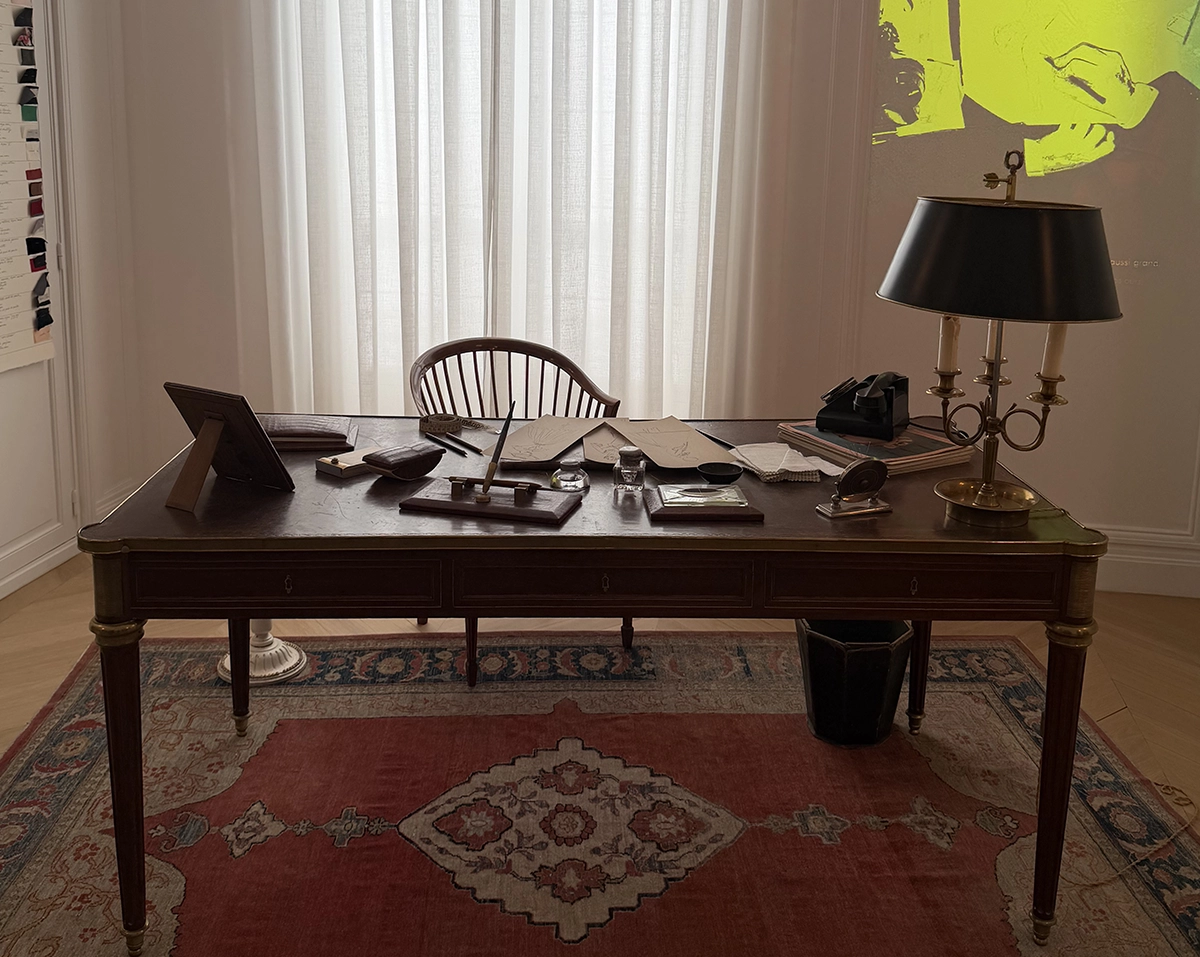
There is also an intimacy to seeing sketches and photographs beside the finished dresses. Fashion today moves at enormous speed, through campaigns, celebrity moments and collections consumed in seconds. La Galerie Dior quietly reverses that perspective. Everything leads back to a pencil line, a piece of fabric and someone in an atelier making it work.
Christian Dior’s workspace
The scenography keeps the experience from becoming academic. Rooms designed by Nathalie Crinière move between darkness and light, archival displays and theatrical installations. It is extremely considered, but never feels like a corporate history presentation.
That may be why La Galerie Dior works so well in Paris right now. Luxury has become very good at creating spaces designed to be photographed, but here there is substance behind the image. La Galerie Dior does not separate fashion from lifestyle, history from desire or culture from luxury. It understands that they have always belonged together.
Daniel Roseberry presented Schiaparelli’s Spring/Summer 2027 collection, Going Clear, beneath the Louvre, translating the house’s surrealist codes into more wearable ready-to-wear.
Demna presents Gucci Spring/Summer 2027 at Milan Fashion Week, transforming the runway into a luxury boutique filled with sharp tailoring, Italian glamour and statement eveningwear.
Law Roach has confirmed Kim Kardashian as a new client after styling her in an archival Tom Ford-era Saint Laurent gown for the Lucas Museum opening in Los Angeles.