Hillary Clinton Is Back, and She Has a Lot to Say
Hillary Clinton returns to podcasting with High Stakes, a new show with Kara Swisher ahead of the 2026 U.S. midterm elections.
Leonardo DiCaprio turns 52 on November 11, marking more than three decades as one of Hollywood's most recognizable and accomplished actors. From the teenage romantic who captivated audiences in Romeo + Juliet and Titanic to the morally complicated characters of Martin Scorsese's films, DiCaprio has built a career defined by his choice of roles and the directors he works with. With seven Academy Award nominations for acting and an Oscar win for The Revenant, his filmography includes some of the most celebrated performances of his generation. On his birthday, we look back at nine films that capture the different stages of his career.
The Innocent Younger Brother in What's Eating Gilbert Grape (1993)
Leonardo DiCaprio was 19 when his performance in Lasse Hallström's What's Eating Gilbert Grape earned him his first Academy Award nomination in 1994. It was an early indication of the talent that would eventually make him one of Hollywood's most sought-after actors.
DiCaprio plays Arnie Grape, a young man with an intellectual disability who lives with his mother and siblings in the small town of Endora, Iowa. Much of the responsibility for his care falls on his older brother Gilbert, played by Johnny Depp, who struggles to balance his family obligations with his desire for an independent life.
Arnie is affectionate, unpredictable and endlessly curious about the world around him. DiCaprio captures these qualities through spontaneous gestures, expressions and changes in mood, creating a character whose innocence contrasts with the frustrations of the family caring for him.
The Lovestruck Romantic in Romeo + Juliet (1996)
Baz Luhrmann's Romeo + Juliet transported Shakespeare's tragedy into a contemporary American setting, replacing Renaissance Italy with the fictional Verona Beach of the 1990s. The original dialogue remained, but the costumes, cars, weapons and soundtrack belonged unmistakably to the decade.
DiCaprio plays Romeo opposite Claire Danes as Juliet. Their characters fall in love despite the longstanding feud between their families, setting in motion a series of decisions with tragic consequences.
With a production budget of approximately $14.5 million, the film earned around $147 million worldwide. Already recognized as a promising young actor, DiCaprio became an international teenage idol following its release. His Romeo is romantic, impulsive and completely consumed by his feelings for Juliet, a performance that helped establish his appeal as a leading man.
The Young Artist in Titanic (1997)
James Cameron's Titanic changed the course of DiCaprio's career. Released in 1997, the film transformed the 23-year-old actor into an international superstar and made his character, Jack Dawson, one of the most recognizable romantic figures in modern cinema.
Jack is a penniless young artist who wins a ticket aboard the Titanic in a poker game. During the voyage, he meets Rose, played by Kate Winslet, a young woman from a wealthy family whose future has already been decided for her.
Their relationship develops despite the social divisions separating them. Jack's independence and enthusiasm for life offer Rose an alternative to the expectations of her privileged upbringing.
When the ship sinks, Jack helps Rose survive but dies in the freezing Atlantic waters. Their final moments together became one of the film's defining scenes.
The extraordinary commercial success of Titanic made DiCaprio a global celebrity. It also created a challenge for the young actor, who would spend the following years taking roles that allowed him to move beyond the romantic image associated with Jack Dawson.
The King and His Prisoner in The Man in the Iron Mask (1998)
In Randall Wallace's historical adventure The Man in the Iron Mask, DiCaprio took on two contrasting roles, playing King Louis XIV of France and his imprisoned twin brother, Philippe.
Louis is an arrogant and ruthless monarch who considers his position untouchable. Philippe, meanwhile, has spent years in captivity, his identity concealed behind an iron mask to protect his brother's claim to the throne.
The Musketeers Athos, Porthos and Aramis, played by John Malkovich, Gérard Depardieu and Jeremy Irons, devise a plan to free Philippe and replace the king.
DiCaprio differentiates the brothers through their speech, expressions and physical behavior. Louis moves with the confidence of a man accustomed to unquestioned authority, while Philippe's uncertainty reflects his years of isolation. The dual performance gave DiCaprio an opportunity to explore two opposing personalities within the same story.
A Marshal Haunted by His Past in Shutter Island (2010)
Martin Scorsese's psychological thriller Shutter Island follows U.S. Marshal Teddy Daniels, played by DiCaprio, as he arrives at a psychiatric hospital on a remote island to investigate the disappearance of a patient.
Accompanied by his partner Chuck Aule, portrayed by Mark Ruffalo, Teddy begins questioning the hospital's staff and patients. But the investigation becomes increasingly disturbing as memories of his wife's death and his experiences during World War II begin to interfere with his understanding of events.
The deeper Teddy becomes involved in the case, the more difficult it is for him to distinguish reality from his own perceptions. DiCaprio portrays his growing psychological distress through moments of suspicion, anger and vulnerability.
As the story approaches its conclusion, the audience is forced to reconsider the events of the investigation and the identity of the man at its center.
The Ruthless Stockbroker in The Wolf of Wall Street (2013)
Martin Scorsese's The Wolf of Wall Street is based on the memoir of Jordan Belfort, the former stockbroker who built a fortune through financial fraud.
DiCaprio plays Belfort as an ambitious, arrogant and relentlessly persuasive businessman. After establishing his brokerage firm, Stratton Oakmont, he accumulates enormous wealth through fraudulent stock sales and the manipulation of investors.
His success finances an extravagant lifestyle of luxury properties, expensive cars, drugs and lavish parties. As his fortune grows, so does his disregard for the law, while federal investigators begin examining the activities behind his business empire.
DiCaprio gives Belfort an almost theatrical confidence, particularly in the speeches he delivers to his employees. His charisma is inseparable from his dishonesty, and the film follows the increasingly destructive consequences of his ambition.
The performance earned DiCaprio another Academy Award nomination for Best Actor.
The Tragic Millionaire in The Great Gatsby (2013)
DiCaprio reunited with director Baz Luhrmann for The Great Gatsby, an adaptation of F. Scott Fitzgerald's 1925 novel.
He plays Jay Gatsby, a mysterious millionaire whose extravagant parties attract New York's wealthy social circle to his Long Island mansion. Behind the champagne, elaborate decorations and endless celebrations is a personal ambition: Gatsby hopes to reunite with Daisy Buchanan, played by Carey Mulligan.
Years earlier, Gatsby and Daisy had been romantically involved. Since their separation, he has devoted himself to acquiring the wealth and social position he believes will make their relationship possible again.
The story unfolds through the perspective of Nick Carraway, Gatsby's neighbor, played by Tobey Maguire. Through Nick, the audience gradually discovers the truth behind Gatsby's fortune and carefully constructed identity.
DiCaprio portrays Gatsby as a man who has achieved extraordinary material success but remains emotionally attached to a relationship that belongs to the past. His confidence often gives way to insecurity, particularly when the reality of Daisy's life threatens the future he has imagined for them.
The Relentless Survivor in The Revenant (2015)
Alejandro G. Iñárritu's The Revenant brought DiCaprio his first Academy Award for Best Actor in 2016.
He portrays Hugh Glass, a frontiersman who is severely injured in a bear attack while traveling through the American wilderness. His fellow expedition member John Fitzgerald, played by Tom Hardy, abandons him and kills his son. Left for dead, Glass begins an exhausting journey through the wilderness, driven by his determination to survive and confront Fitzgerald.
The film was shot in remote locations across Canada and Argentina, where difficult weather conditions added to the physical demands of the production.
Glass speaks relatively little throughout the story. DiCaprio communicates much of the character's suffering through movement, breathing and facial expressions, depicting a man whose physical injuries make even the simplest actions difficult.
The performance earned him the Oscar after several previous nominations, bringing one of Hollywood's most closely followed awards stories to an end.
The Fading Television Star in Once Upon a Time... in Hollywood (2019)
Quentin Tarantino's Once Upon a Time... in Hollywood takes place in Los Angeles in 1969, during a period of significant change in the American film industry.
DiCaprio plays Rick Dalton, a former television Western star whose career is gradually losing momentum. Once accustomed to leading roles, Dalton now finds himself playing supporting characters and villains while struggling to secure his future in an industry that increasingly favors a different generation of actors.
His closest companion is Cliff Booth, his longtime stunt double, driver and friend, played by Brad Pitt.
Dalton's professional insecurities shape much of his behavior. He worries about his reputation, questions his abilities and becomes frustrated when his performances fail to meet his expectations. Yet he is still capable of delivering impressive work when given the opportunity.
DiCaprio moves between comedy, frustration and vulnerability, portraying an actor whose greatest fear is becoming irrelevant. The performance earned him nominations for both the Golden Globe and the Academy Award for Best Actor.
In 2021, Tarantino published a novel based on the film, expanding Rick Dalton's personal history and career with stories and details that were not included in the original screenplay.
Hillary Clinton returns to podcasting with High Stakes, a new show with Kara Swisher ahead of the 2026 U.S. midterm elections.
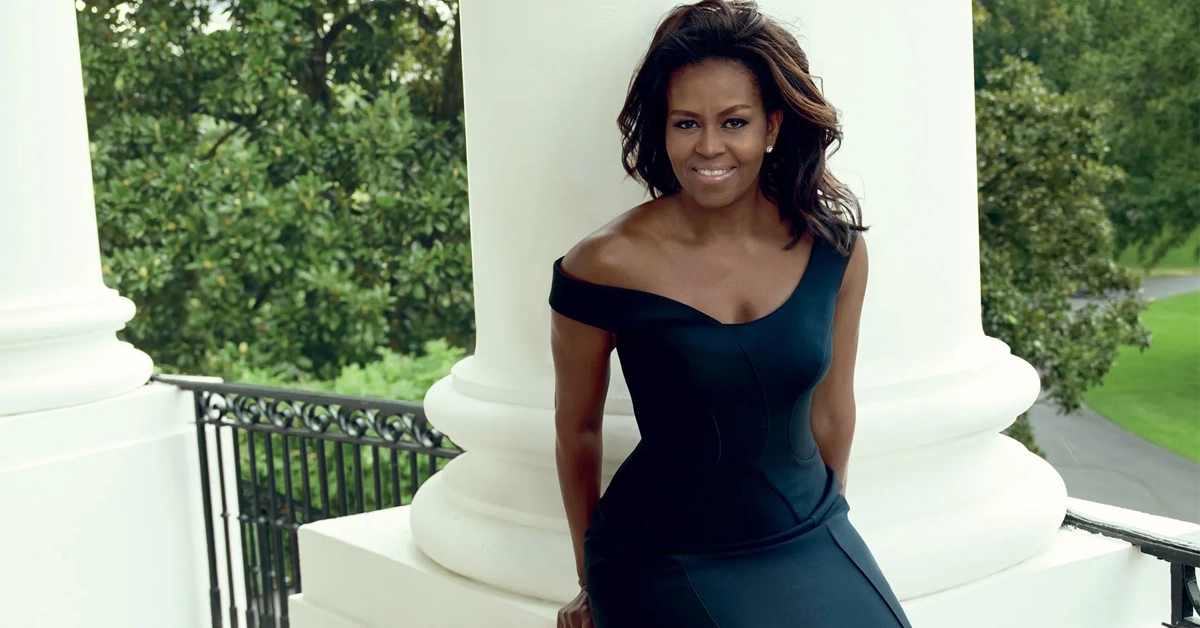
Michelle Obama announces $1 million in funding through the Girls Opportunity Alliance to support girls’ education and empowerment across 15 countries.
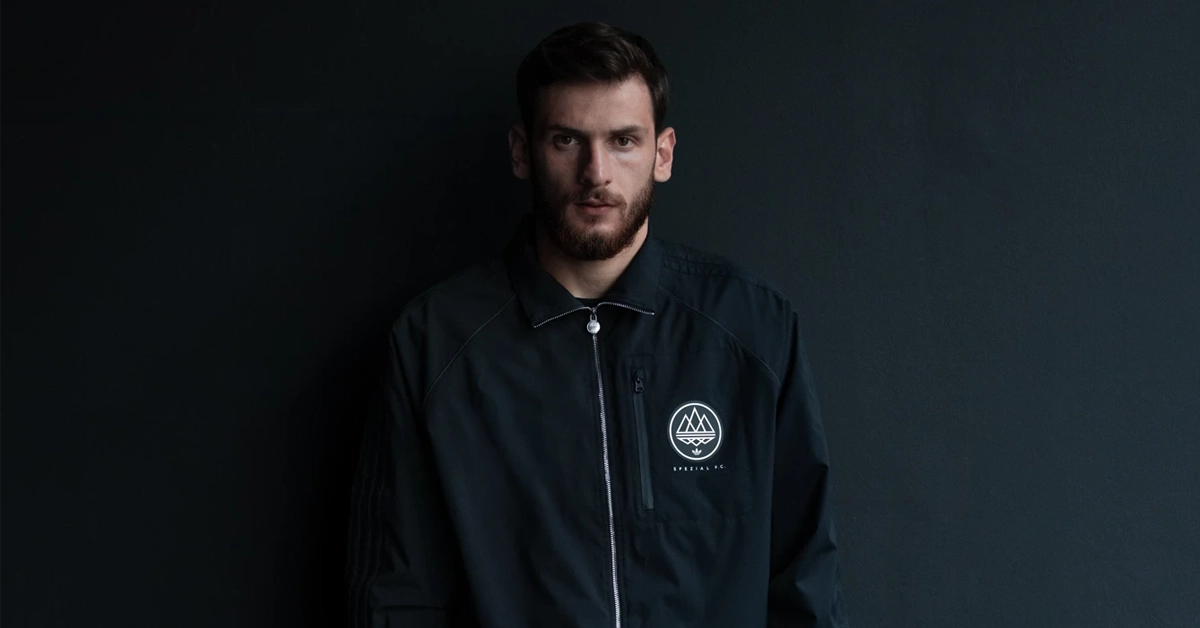
Khvicha Kvaratskhelia fronts the adidas SPZL F.C. Fall/Winter 2026 campaign, featuring retro football shirts and classic sportswear.