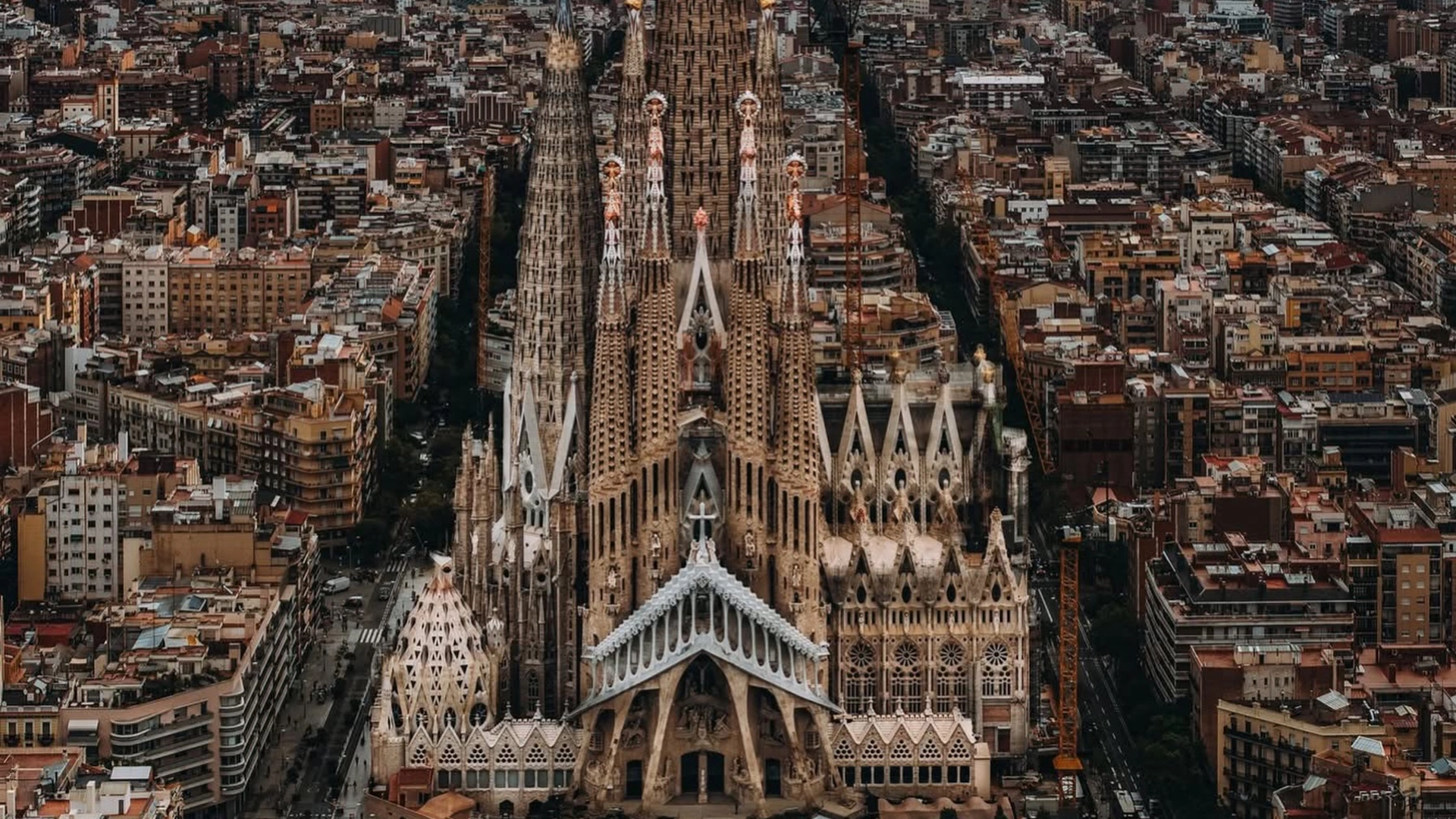
Europe’s Most Beautiful Gothic Buildings
Explore Europe’s most beautiful Gothic buildings, from Sainte-Chapelle and Milan Cathedral to Batalha Monastery and Venice’s Doge’s Palace.
Tilda Swinton has a new role, and this time, her co-stars are covered in diamonds. The Oscar-winning actress is Cartier’s newest global ambassador, making her debut in Into the Wild, a campaign featuring some of the French jewelry house’s most extraordinary animal-inspired creations.
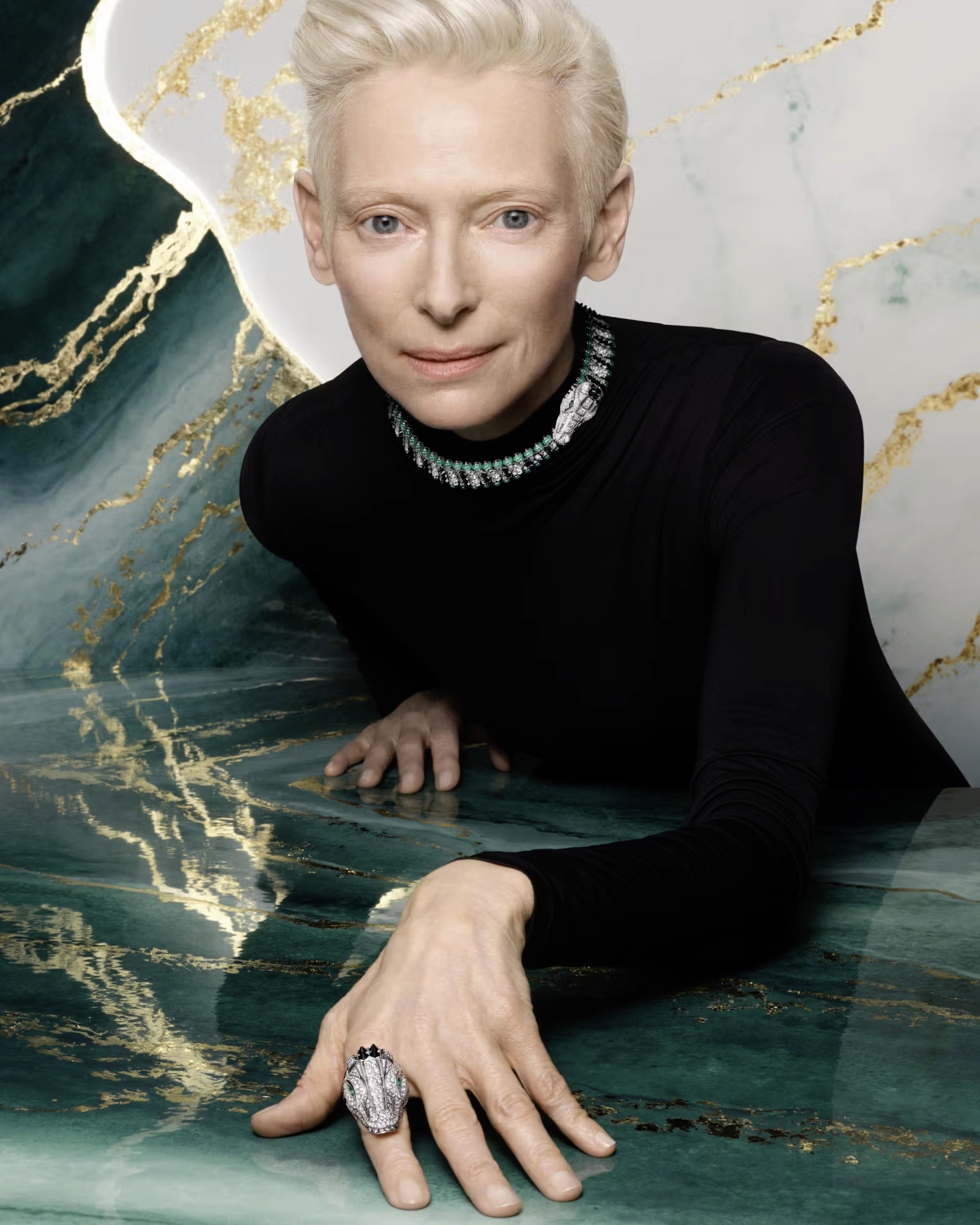
Photographed by Sølve Sundsbø, Swinton appears alongside a collection of jeweled creatures that seem almost ready to move. A crocodile curls around her wrist, a tiger bares its teeth on her finger and Cartier’s famous panther takes on new sculptural forms. With her platinum-blonde hair and unmistakable presence, Swinton looks entirely at home among them.
Five animals take center stage in the new Faune & Flore de Cartier designs: a tiger, crocodile, parrot, carp and rhinoceros. Each appears as an elaborate ring, with precious stones chosen to capture its distinctive features. The tiger’s stripes combine blue sapphires, aquamarines and dumortierite quartz, while the parrot’s colorful plumage is recreated in coral, onyx and garnets. The rhinoceros has carved quartz horns, and the crocodile’s emerald eyes stand out against diamonds and black onyx.
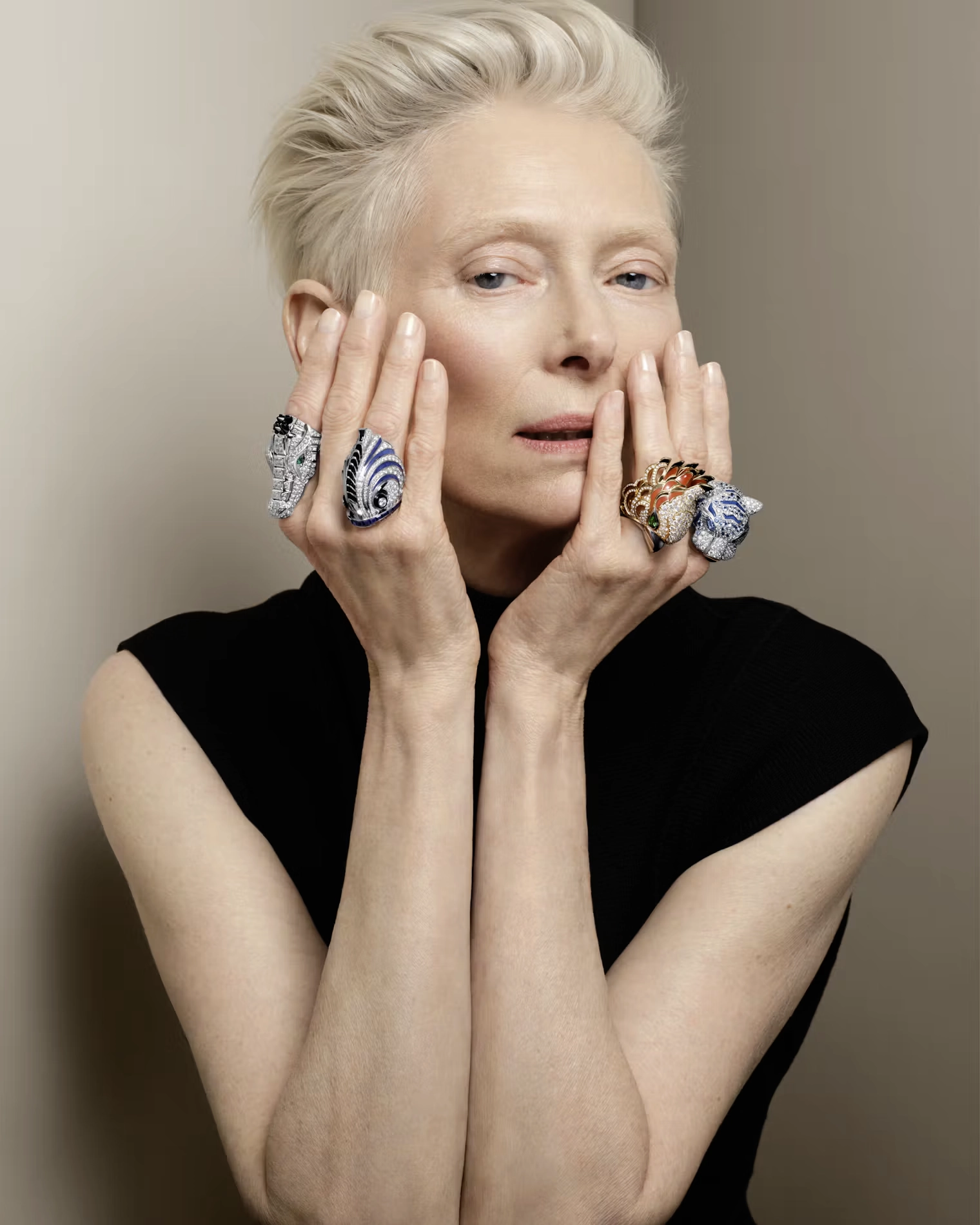
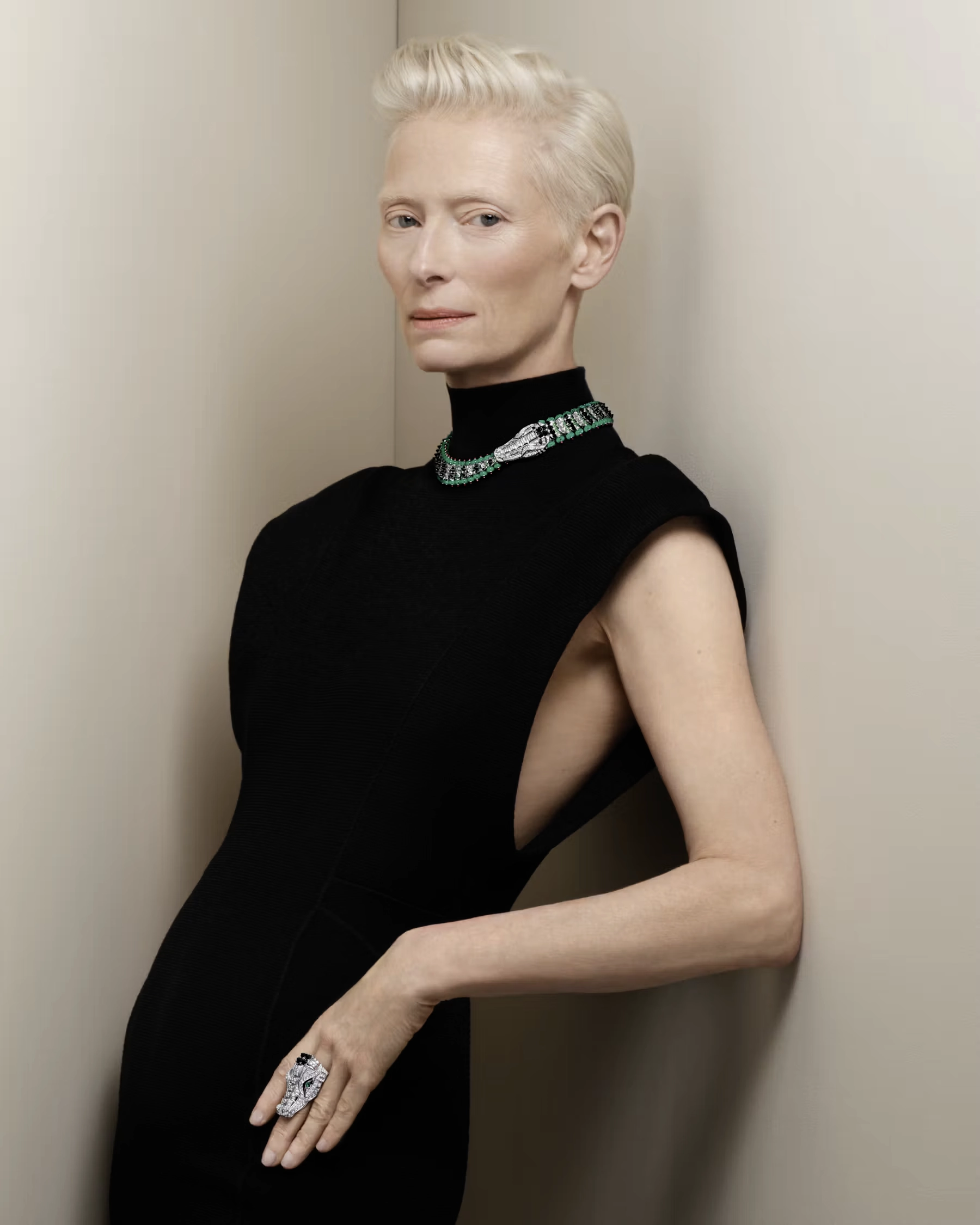
Some of the most remarkable details are hidden in the construction. The crocodile bracelet has a fully articulated body that wraps around the wrist, with a clasp concealed inside its mouth. The tiger receives a similar treatment, its gemstone-covered body designed to follow the movement of the wearer.
Cartier’s best-known animal, the panther, has its own place in the collection. Diamond-covered panthers face one another across a bracelet, while another appears on a medallion-shaped jewelry watch inspired by traditional cameo carving. The animal sits above the dial, with green tsavorite eyes and lacquered details recalling vintage Cartier designs.
Animals have appeared in Cartier jewelry for more than a century. Birds and insects were among the earliest subjects, followed by reptiles, big cats and imaginary creatures. The panther became particularly important to the house, making its first three-dimensional appearance in 1948 and remaining one of its most recognizable designs.
Explore Europe’s most beautiful Gothic buildings, from Sainte-Chapelle and Milan Cathedral to Batalha Monastery and Venice’s Doge’s Palace.
Learn how to make the ultimate creamy pumpkin soup with this easy, one-pot recipe. Perfect for a cozy autumn dinner, it’s quick, healthy, and packed with rich flavor.
A little color goes a long way. Discover TheDiary’s edit of five tinted lip balms from Rhode, Chanel, Guerlain, ILIA and VIOLETTE_FR.