
Tilda Swinton Takes Cartier Into the Wild
Tilda Swinton fronts Cartier’s Into the Wild campaign, showcasing diamond-encrusted panthers, crocodiles and other animal-inspired jewelry designs
At Sainte-Chapelle in Paris, the first thing you notice is the glass. Fifteen immense windows surround the upper chapel, their colored panels held within a remarkably slender stone framework. Across Europe, Gothic architecture takes many forms: the elaborate marble of Milan Cathedral, the vast towers of Cologne, the waterfront façades of Venice’s Doge’s Palace. These buildings reveal its range, from intimate royal chapels to landmarks that took centuries to complete.
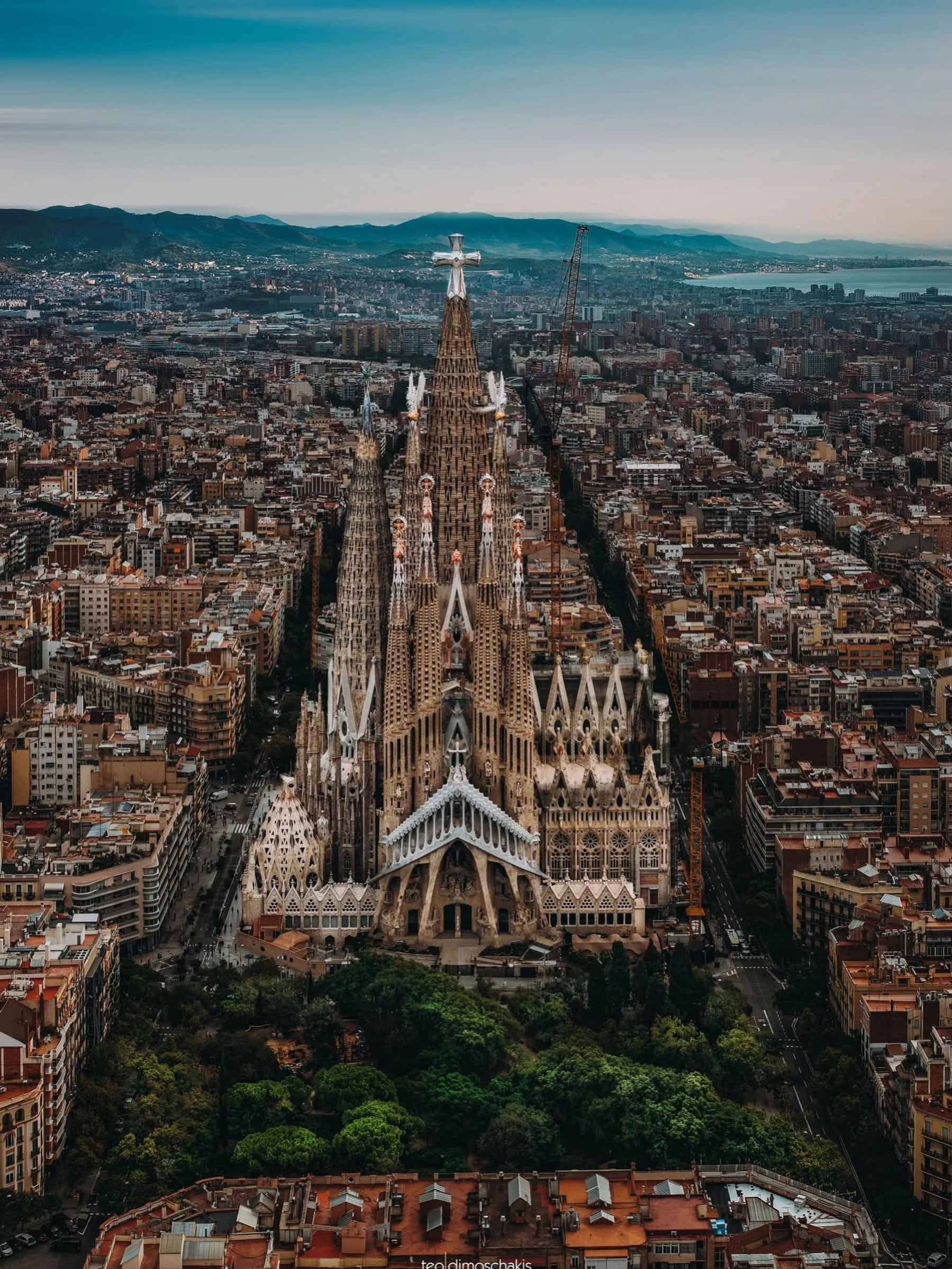
Inside the Sagrada Família, branching columns rise toward the vaults while stained glass fills the interior with shifting color. Antoni Gaudí took over the project in 1883, transforming an initially Neo-Gothic design into a remarkably original exploration of geometry and natural forms. Gothic influences remain part of its architectural language, but the tree-like supports reveal how far Gaudí developed his own approach to structure. Looking upward offers the most compelling view: the columns divide as they rise, creating the impression of a forest canopy overhead.
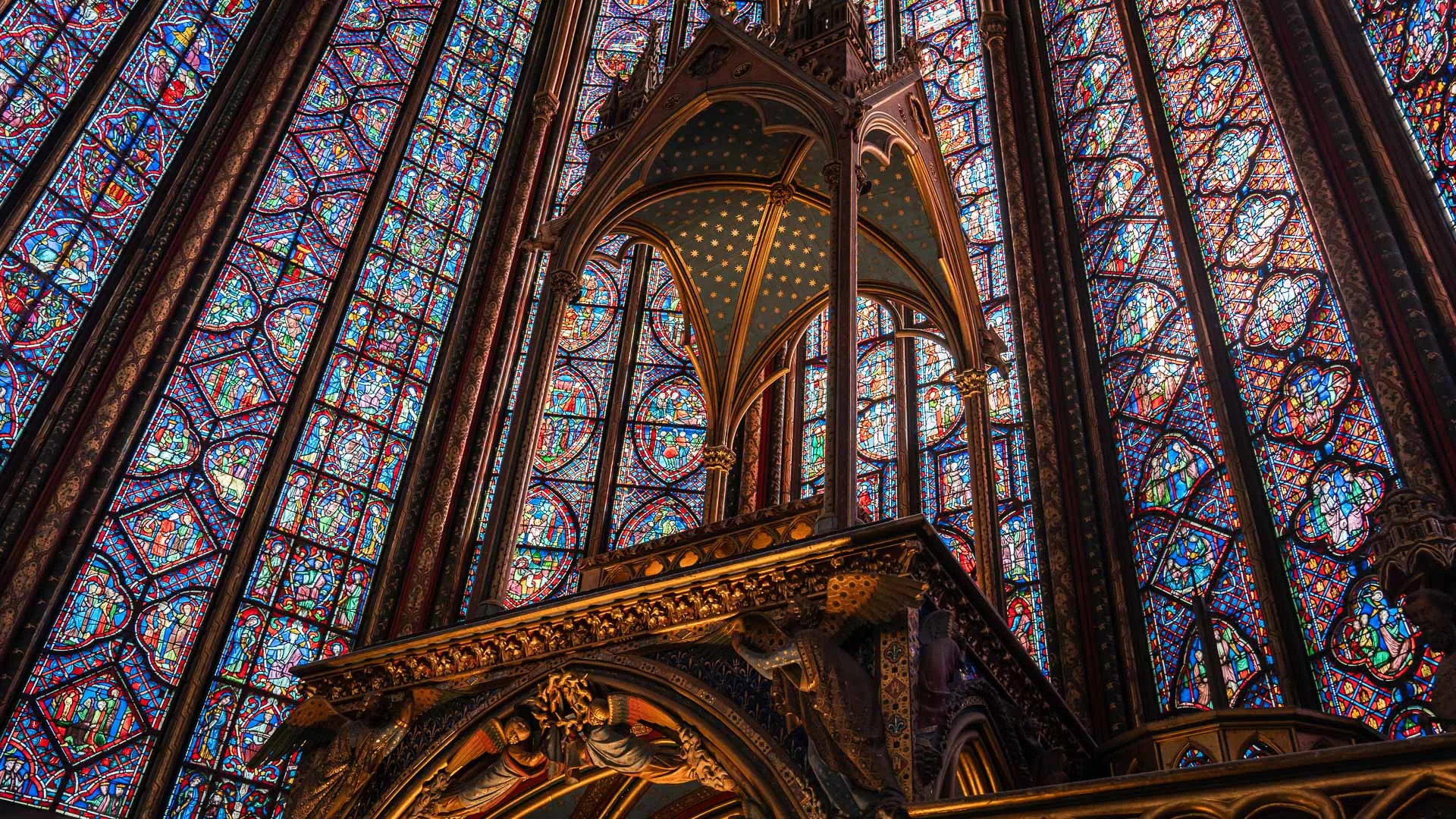
Commissioned by Louis IX to house sacred relics and consecrated in 1248, Sainte-Chapelle offers an extraordinary encounter with medieval stained glass. Its upper chapel was conceived around the ambition to let light fill the building, with stone supports occupying as little space as possible. Biblical scenes unfold across the windows, while the western rose introduces the curling, flame-shaped tracery of later Flamboyant Gothic. The most rewarding view is from within, where the architecture allows the glass to command almost all your attention.
Palace of Westminster, London, England
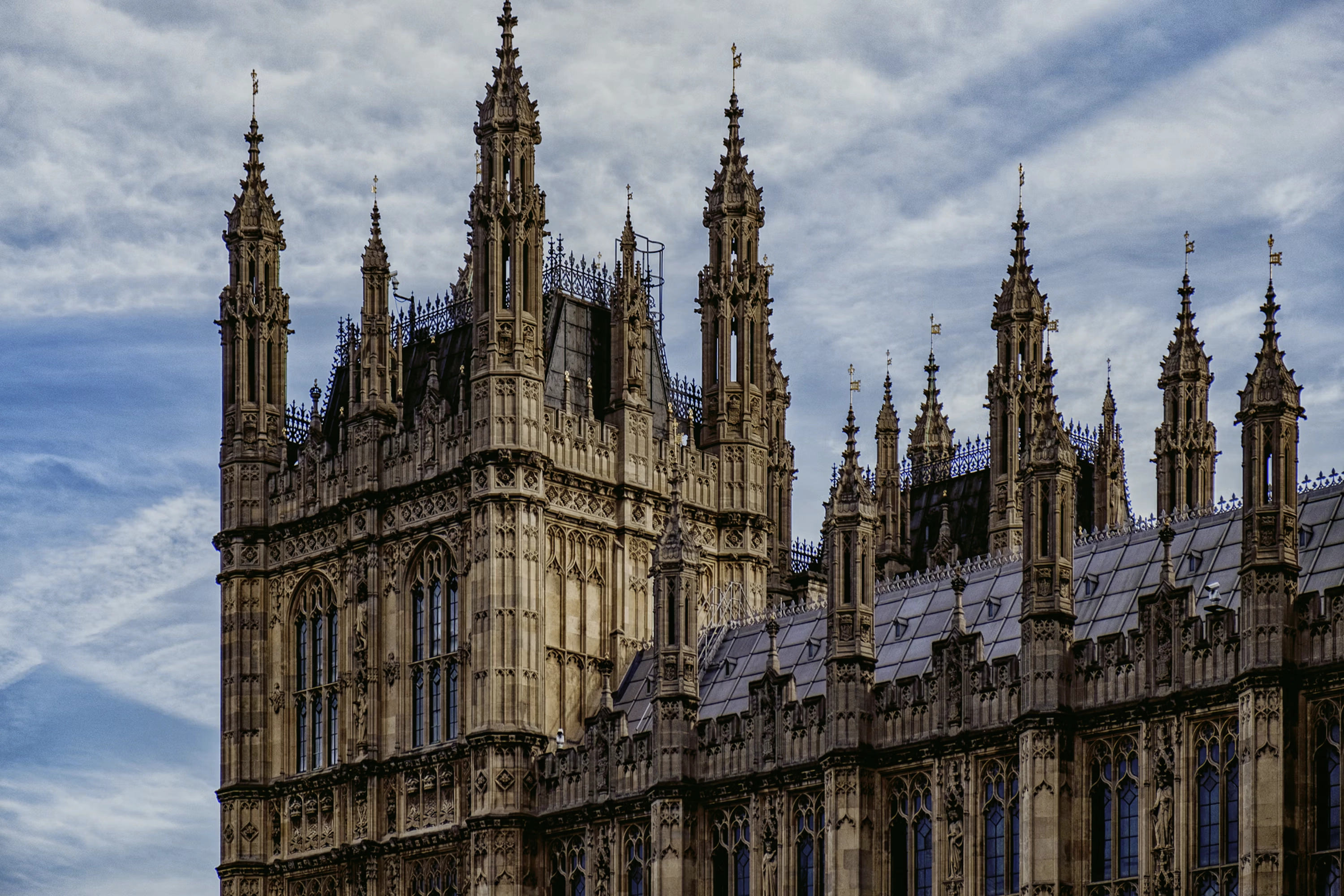
Along the Thames, the Palace of Westminster presents a long riverfront façade of pointed windows, elaborate stonework and towers. Following the fire of 1834, Charles Barry designed the new parliamentary building, with Augustus Pugin responsible for much of its Gothic detailing and richly decorated interiors. It is a defining example of nineteenth-century Gothic Revival, translating medieval architectural forms into a working seat of government. Inside, Pugin’s attention extended from carved paneling and gilded ornament to furniture and even doorknobs, giving the grand ceremonial spaces a remarkable consistency of detail.
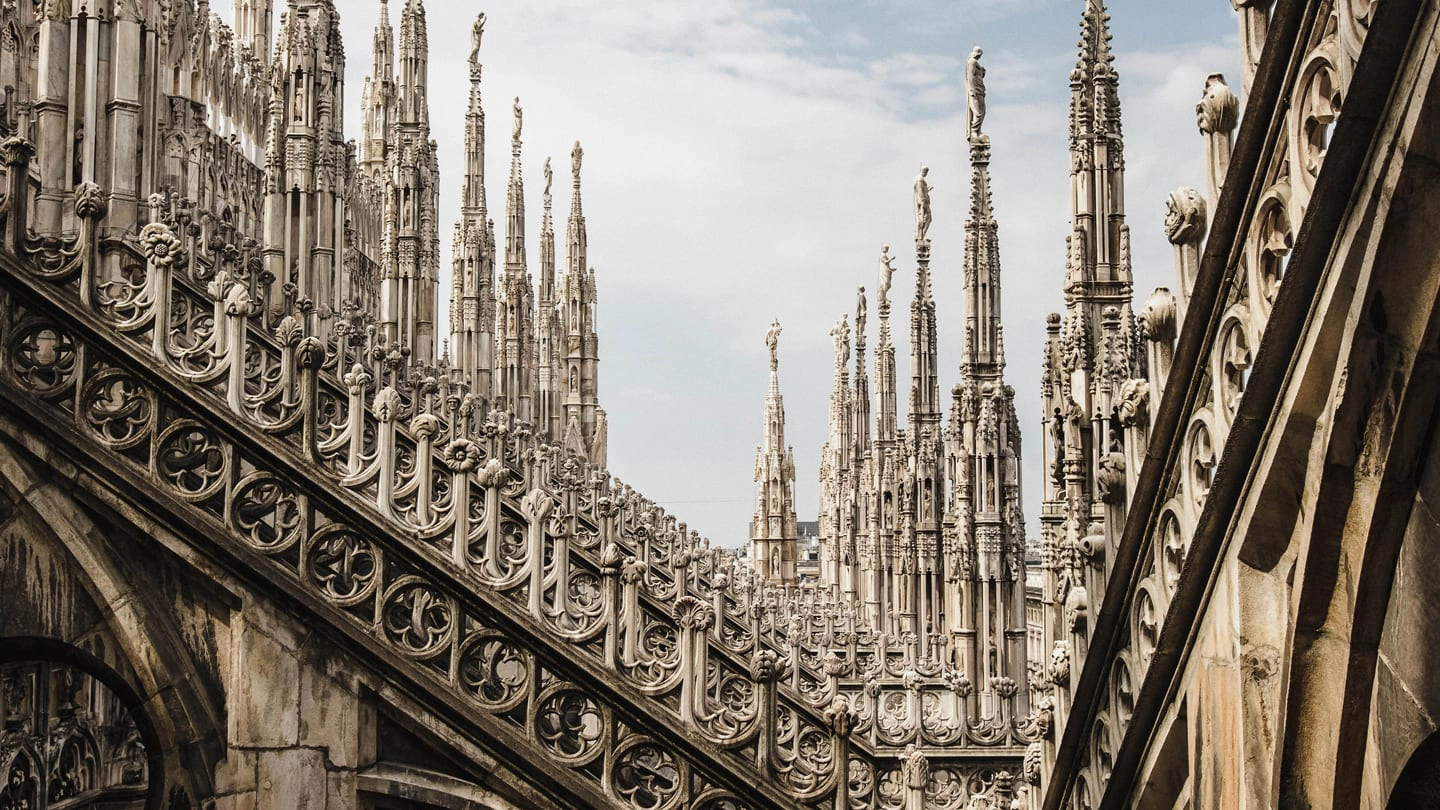
In Milan, the Duomo makes its impression through marble and an extraordinary accumulation of carved detail. Construction began in 1386, and the decision to use Candoglia marble helped distinguish the cathedral from Lombardy’s established tradition of brick building. Architects, sculptors and stoneworkers arrived from across Europe, bringing different approaches to a project that continued for centuries. That long history remains part of its appeal: the building brings together Gothic architecture, later artistic interventions and generations of craftsmanship.

Cologne Cathedral approaches Gothic beauty through sheer magnitude. Its twin towers rise approximately 157 meters, above a monumental five-aisled church. Although work began in 1248, the cathedral was completed only in 1880. Its familiar silhouette therefore belongs to both medieval ambition and nineteenth-century determination, a reminder that some of Europe’s most recognizable historic buildings acquired their final form much later than their foundations suggest.
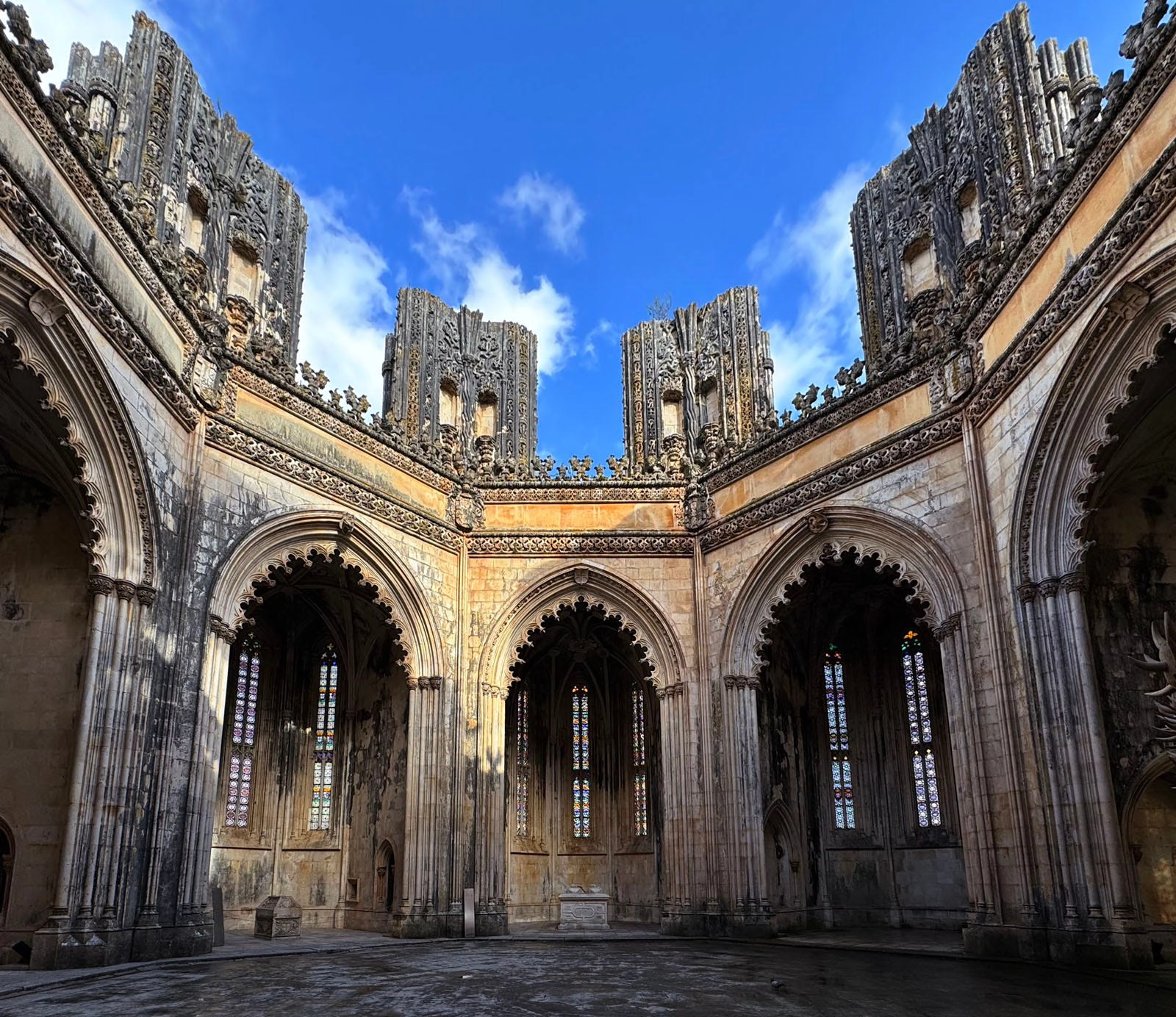
Portugal’s Batalha Monastery offers a different kind of abundance. Founded to commemorate the Portuguese victory at Aljubarrota in 1385, it became a major royal building project across successive generations. Gothic architecture developed here alongside the elaborate ornament of Manueline art, particularly evident in the Royal Cloister’s intricate stone tracery. In the Founder’s Chapel, an eight-pointed star-shaped vault rises above the tomb of João I and Philippa of Lancaster, bringing architectural invention and royal history into the same space.
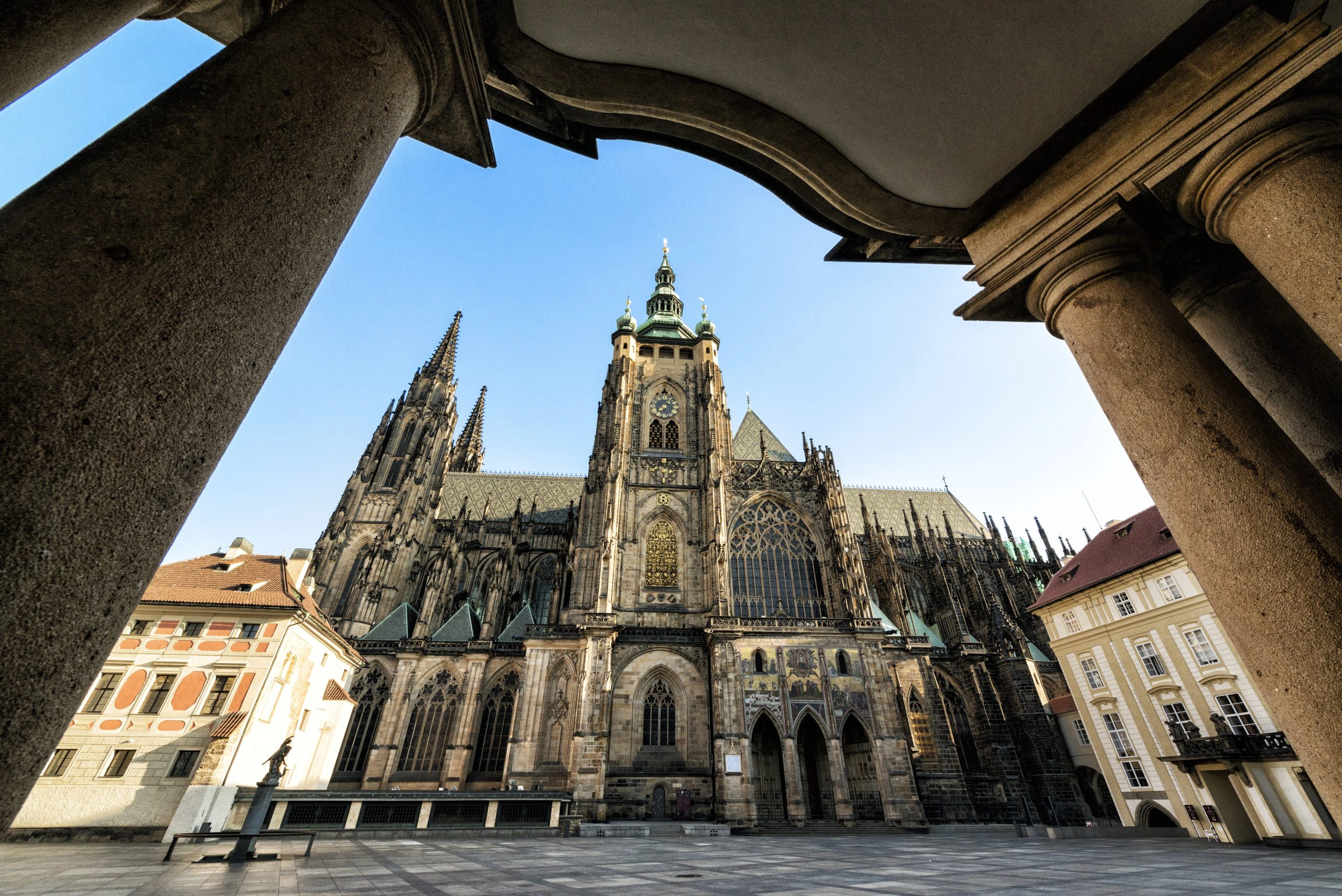
Within Prague Castle, St. Vitus Cathedral also carries the evidence of a prolonged construction history. Charles IV began the Gothic cathedral in 1344; work was interrupted, and its later Neo-Gothic completion culminated in consecration in 1929. The St. Wenceslas Chapel provides its most distinctive interior encounter. Precious stones cover portions of the walls beneath paintings, including surviving fourteenth-century decoration, giving this smaller space a concentrated richness within the larger cathedral.
King’s College Chapel, Cambridge, England
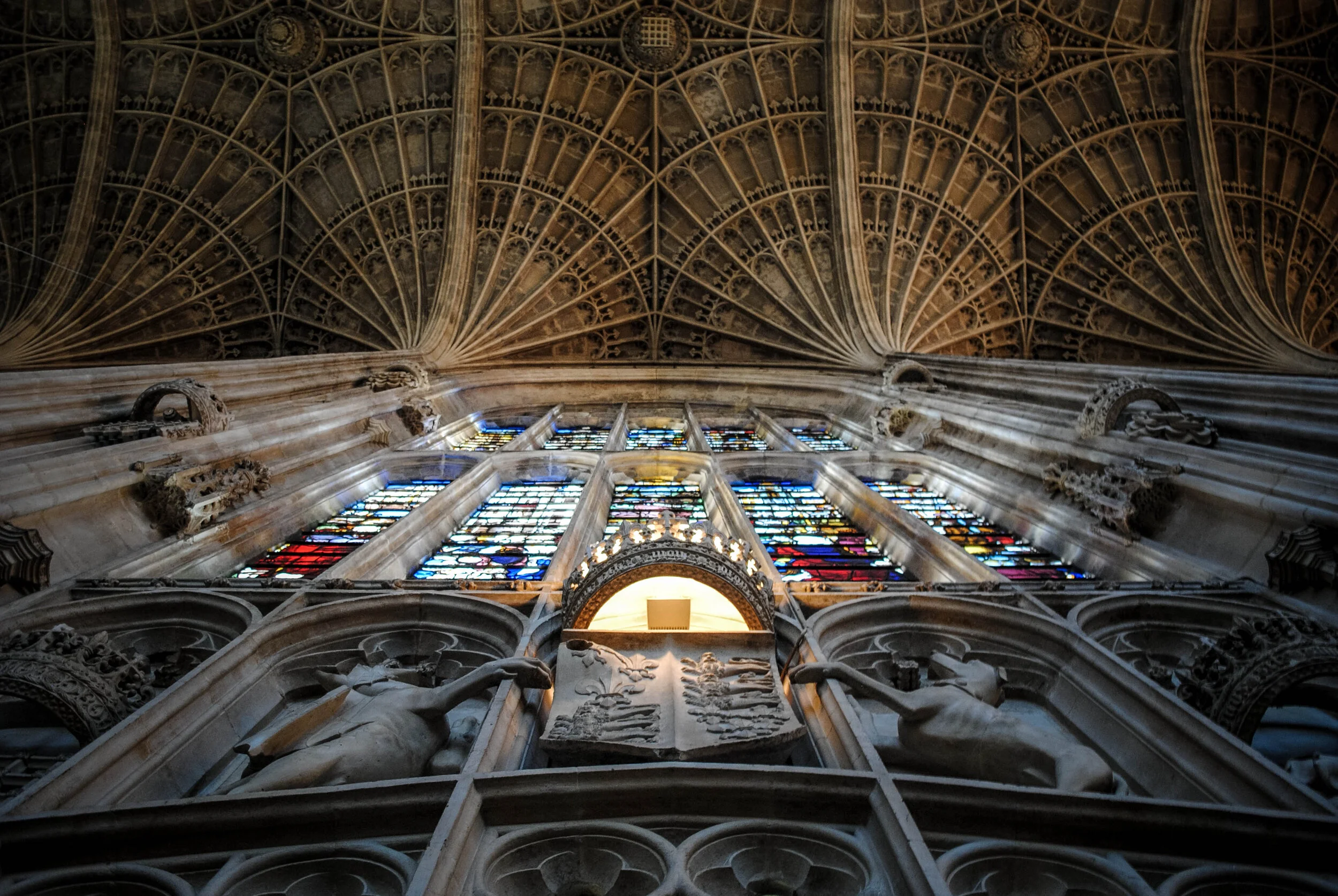
In Cambridge, the ceiling of King’s College Chapel is reason enough to linger. Its expansive fan vault spreads overhead in an intricate pattern, accompanied by sixteenth-century stained glass and carved choir stalls. Construction began in 1446, and the main structure was complete by 1515. The chapel’s beauty comes from the precision of its proportions as much as its ornament: the repeated architectural forms give the elaborate interior an exceptional sense of order.
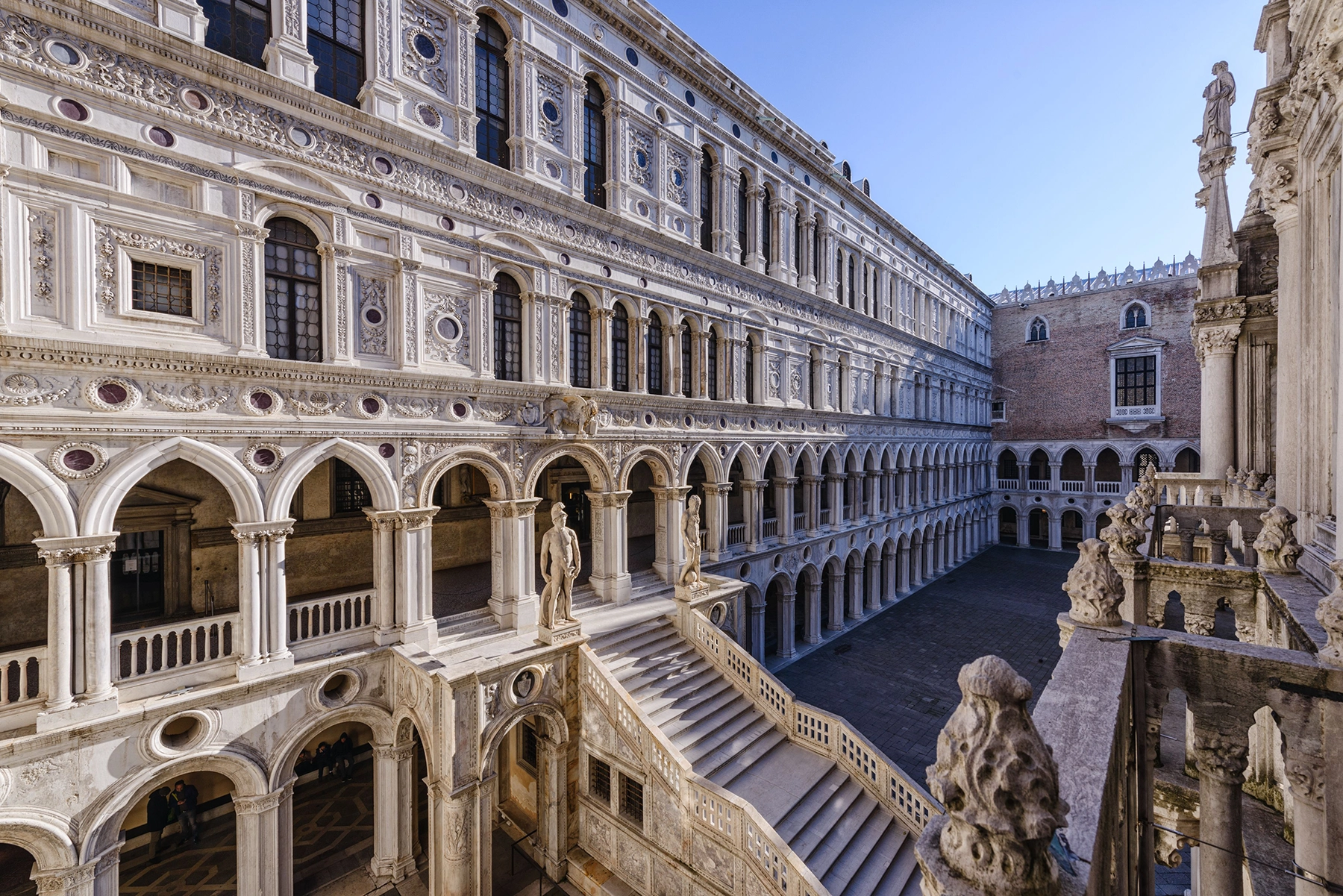
Venice’s Doge’s Palace gives the selection a civic dimension. Its Gothic waterfront and Piazzetta wings developed during the fourteenth and fifteenth centuries, while later Renaissance and Mannerist additions expanded the complex. The palace served the political and administrative life of the Venetian republic, demonstrating how Gothic architecture could accommodate government and ceremony as well as worship. Seen beside the water, its façades offer a distinctly Venetian expression of the style, inseparable from the setting around them.
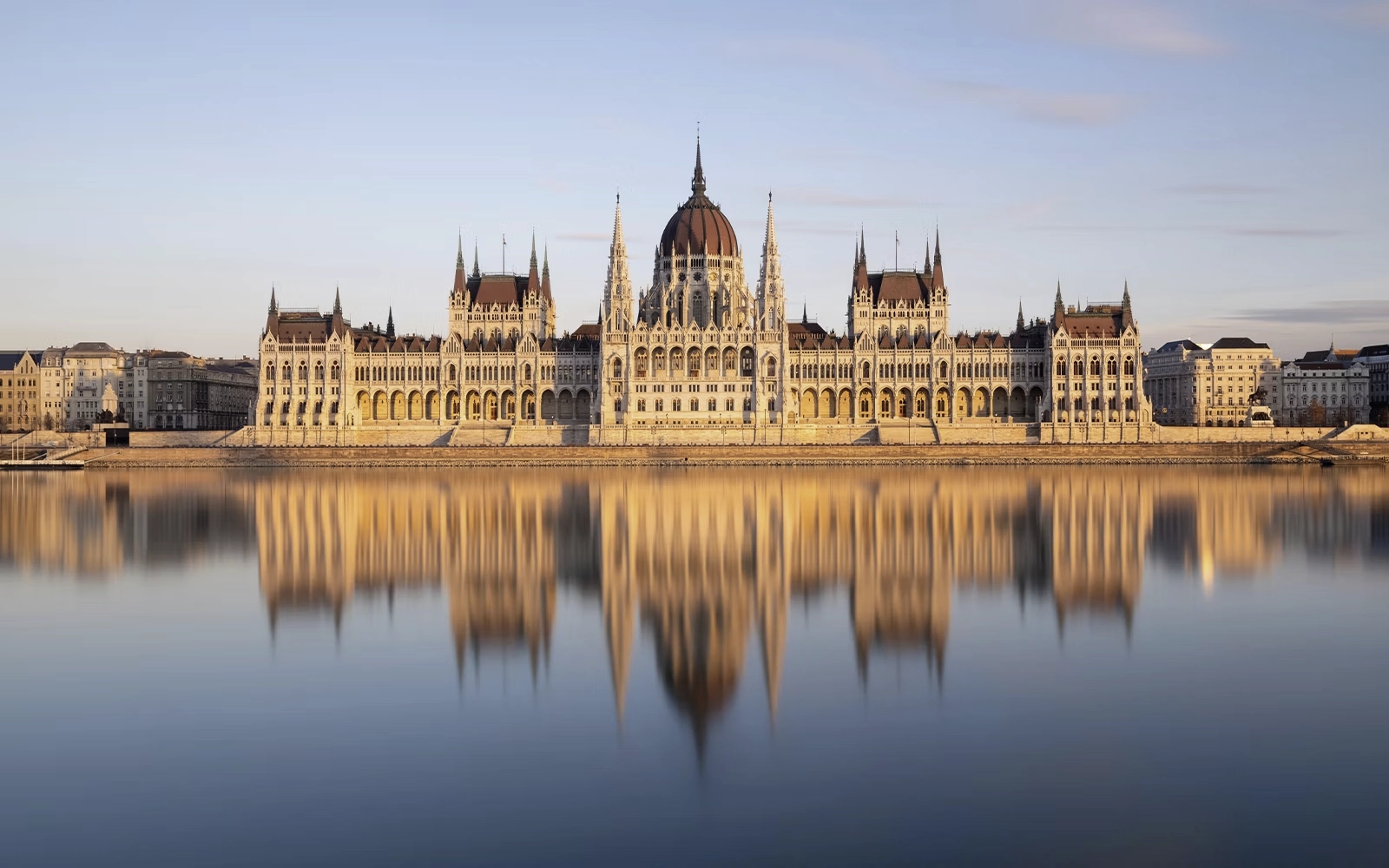
On the banks of the Danube, the Hungarian Parliament Building presents an elaborate façade of pointed arches, slender spires and sculpted ornament beneath a commanding central dome. Designed by Imre Steindl, it was built between 1885 and 1904 in the Gothic Revival style. Inside, the ornate Grand Stairway leads to the Dome Hall, conceived as the architectural center of the building. The view from across the river reveals the full composition, with the dome rising between two symmetrical wings.
Tilda Swinton fronts Cartier’s Into the Wild campaign, showcasing diamond-encrusted panthers, crocodiles and other animal-inspired jewelry designs
Learn how to make the ultimate creamy pumpkin soup with this easy, one-pot recipe. Perfect for a cozy autumn dinner, it’s quick, healthy, and packed with rich flavor.
A little color goes a long way. Discover TheDiary’s edit of five tinted lip balms from Rhode, Chanel, Guerlain, ILIA and VIOLETTE_FR.